








OUR MODEL

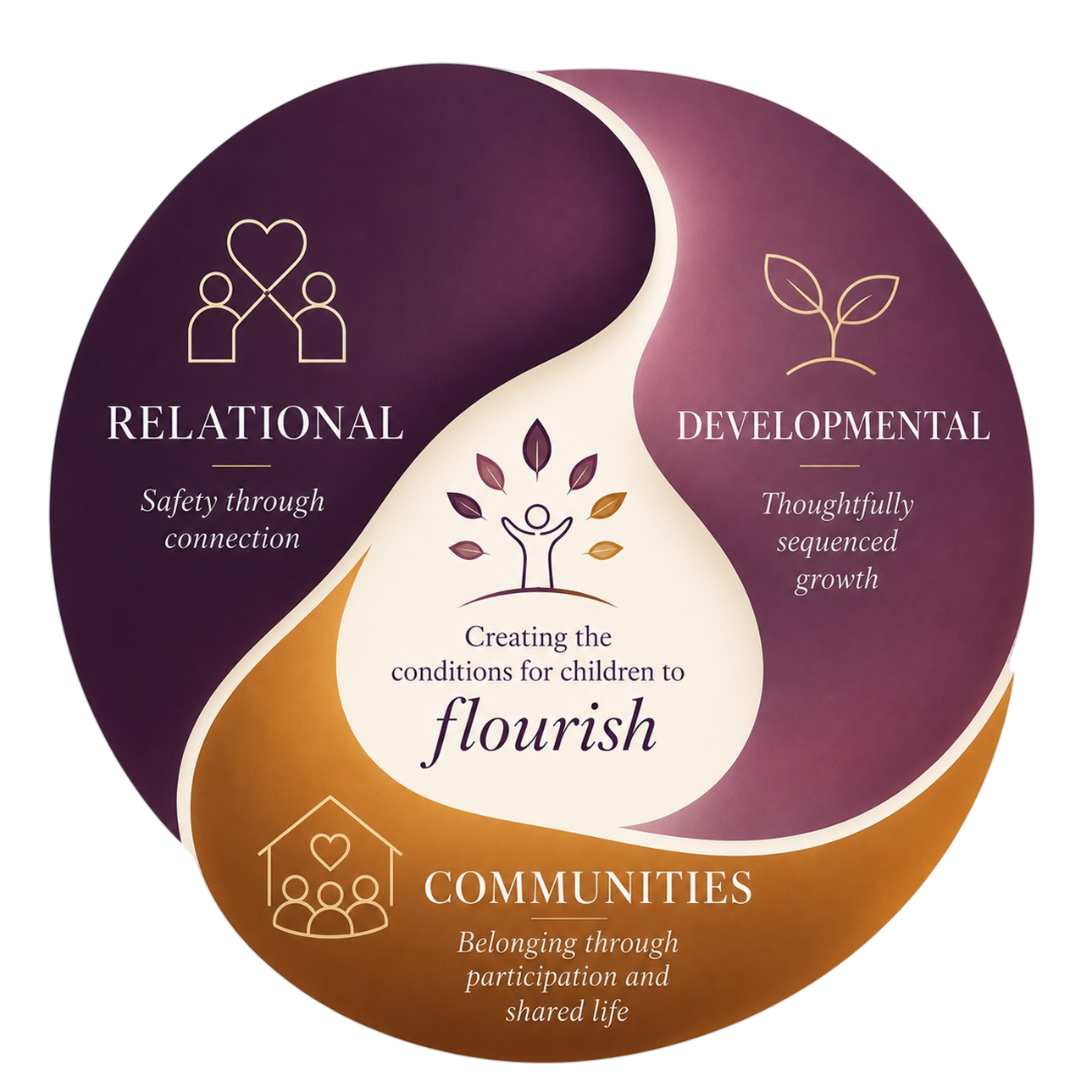
Relational developmental communities

Relationships, developmental growth, and community life intentionally organized around children's healing, belonging, and long-term flourishing.

A DIFFERENT WAY OF ThINKING

A different way of thinking about residential care

Residential care is often described through buildings, staffing structures, placements, and services.

We begin somewhere else.

We begin with the idea that human beings develop through relationships and communities.

Children's difficulties emerge in relationships, are carried in relationships, and are often healed through relationships.

This has profound implications for how homes are organized, how adults work together, and how children experience everyday life.

Relational Development

FOUNDATIONS OF THE MODEL

The ways of being, thinking and
relating that shape everyday life within our homes.

Relational Practice

Relationships matter.

Warm, attuned and emotionally available adults create the conditions in which children can begin to feel safe, understood and valued. Healing emerges through repeated experiences of connection, repair, delight and trust over time.

Inspired by DDP, attachment theory and relational therapeutic practice.

Developmental Thinking

Development thoughtfully sequenced.

We seek to understand where a child is developmentally and emotionally, not simply chronologically. Care planning, opportunities and expectations are thoughtfully sequenced so that the right support arrives at the right time.

Influenced by neuro-sequential and developmental models of growth.

Therapeutic Community Principles

People grow through participation.

Children develop through belonging to safe, emotionally containing communities where relationships, contribution, shared responsibility and meaningful participation all matter. Community itself becomes part of the therapeutic process.

Influenced by therapeutic community traditions and group-based approaches to change.

THERAPEUTIC MOMENTS, NOT JUST THERAPY

The therapeutic quality of everyday life.

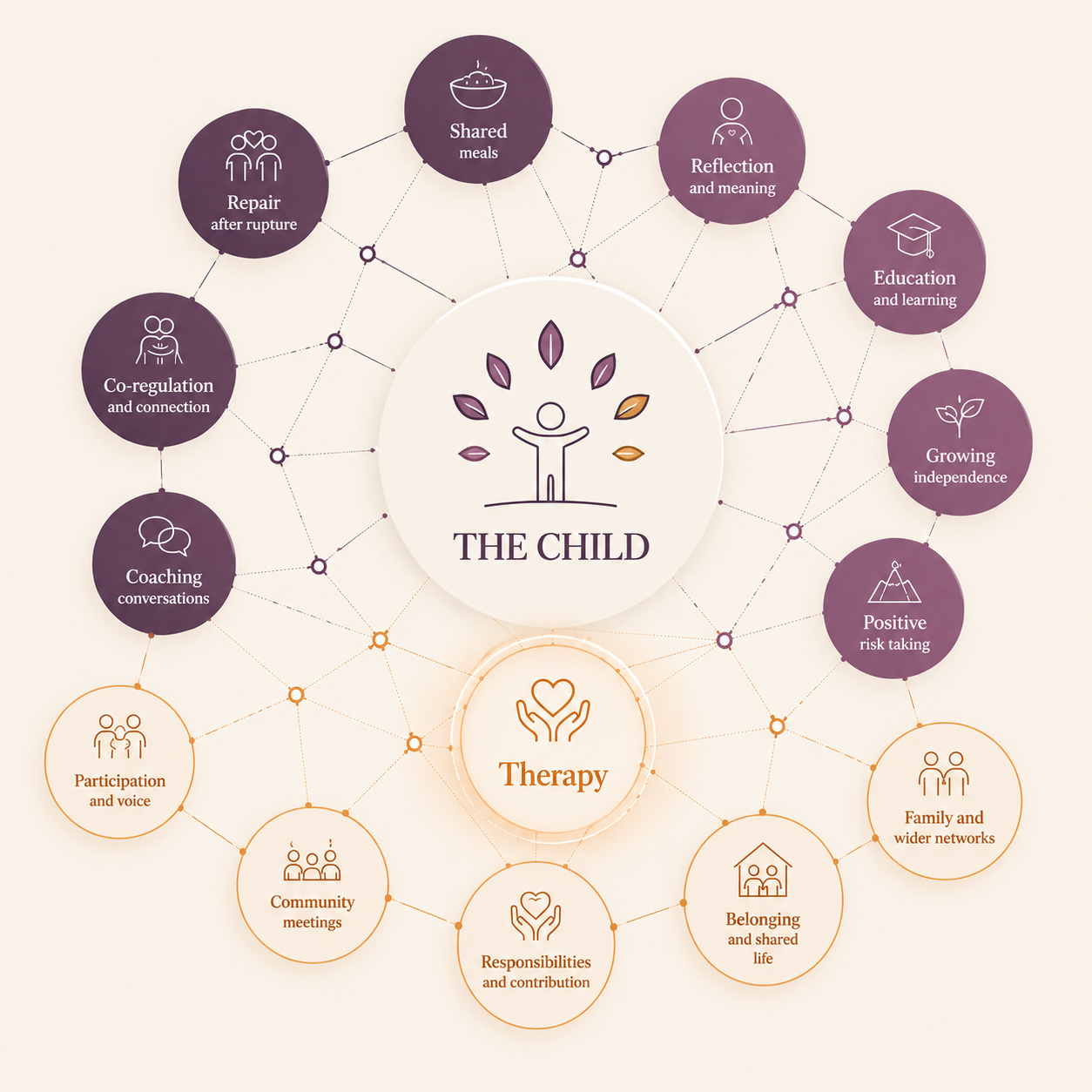
Therapeutic Moments Ecosystem

Therapy can be a powerful intervention. but transformation is more reliably woven through everyday life.

Whilst formal therapy can play an important role for some children, we believe healing and developmental growth are more often shaped through repeated everyday experiences of safety, connection, reflection, participation and care over time.

Shared meals. Repair after rupture. Community meetings. Reflection. Boundaries held with care. Positive routines. Participation. Co-regulation. Moments of delight.

Over time, these therapeutic moments become woven into a child’s lived experience of themselves, others and the world around them.

THE MY TRIBE JOURNEY

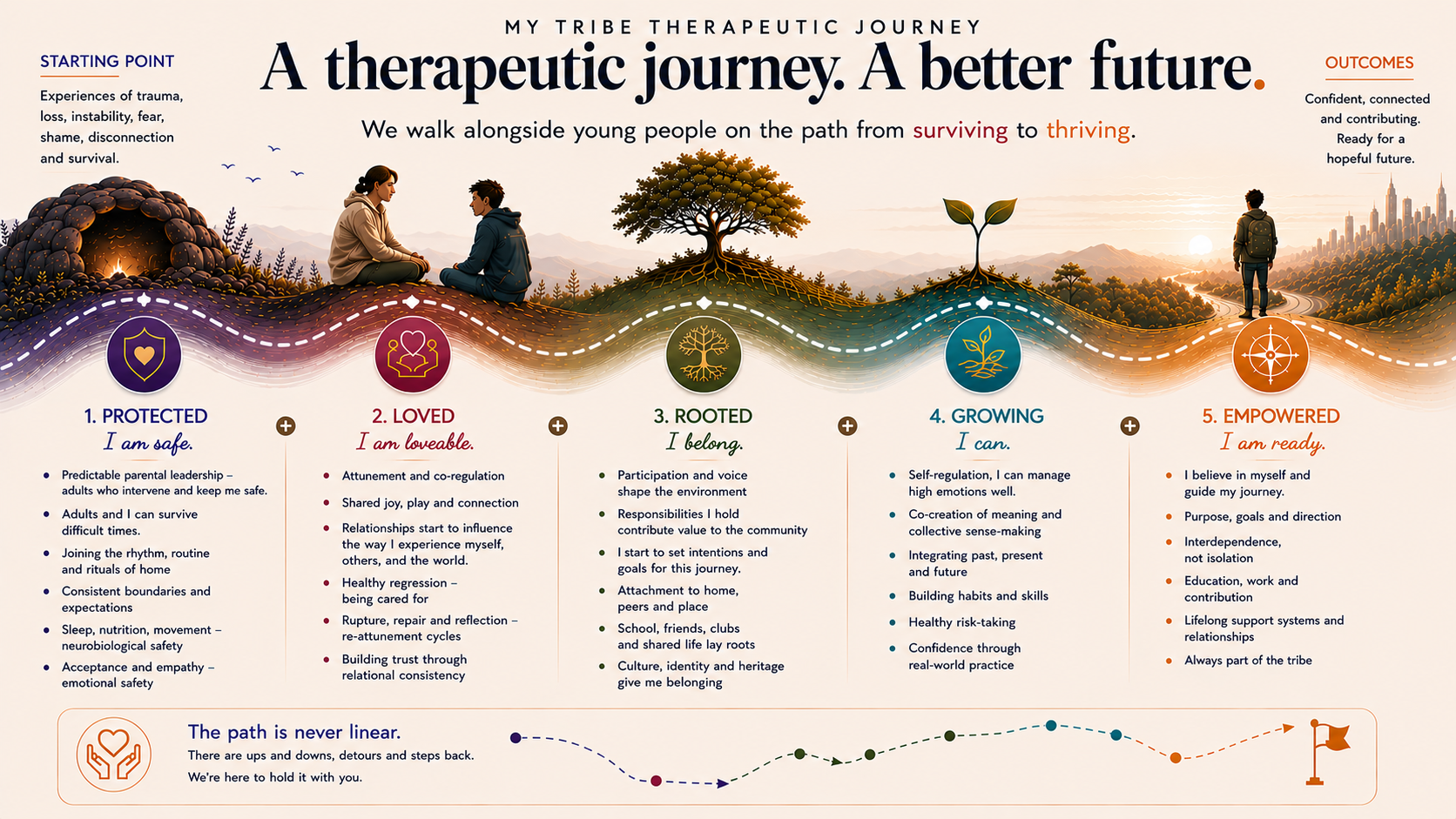
Our therapeutic programme for growth over time.

The My Tribe Journey organises care around the developmental and emotional progression we hope children experience during their time with us.

The My Tribe Journey

GOVERNANCE & EXTERNAL LEARNING

A model held open to reflection, challenge and peer review.

TCTC membership

Engagement with therapeutic community thinking and practice development.

C of C Accreditation

Reflective accreditation through the Royal College of Psychiatrists’ Community of Communities process.

DDP accreditation journey

Whole-organisation mapping against DDP principles as an early residential service to pursue this depth of integration.

Practice governance board

External members with DDP and therapeutic community experience supporting reflective oversight.

INDEPENDENCE THROUGH INTERDEPENDENCE

Transition treated as a thoughtful process, not a single event.

We seek to help young people move beyond residential care with identity, belonging, meaningful pathways and the emotional and practical foundations required for adult life.

Therapeutic Story

Transformation revealed through extraordinary moments

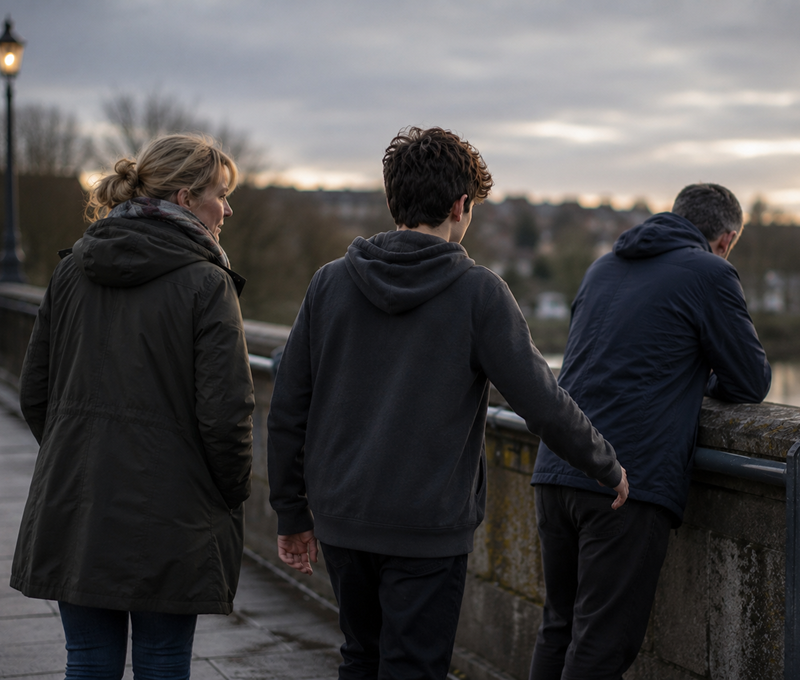
One young person arrived with us in deep emotional crisis. During his first weeks in care, adults within the home intervened to protect him on a bridge.

Around a year later, whilst walking with an adult across that same bridge, he noticed another man attempting to do the same.

Together, they moved instinctively toward him, slowing the moment, helping to prevent the jump and remaining alongside him until help arrived. The young person later received an award from the local authority for his bravery and intervention.

For us, the moment represented far more than bravery alone. A young person who once could no longer imagine a future had, over time, begun to rediscover connection, responsibility, empathy and hope. In helping to save another life, something of his own transformation became visible too.

“Staff have a good understanding of the children and their needs and how to work therapeutically with them. The home’s therapeutic approach, detailed in the statement of purpose, is evident in everything that staff do, both with and for the children.”

OFSTED